Juicy and pleasantly chewy with milk chocolate, walnut and currant aromas and flavors. Medium-bodied, creamy and flavorful.
Reviews:
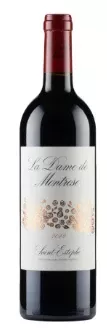
- Decanter: The Merlots were so good this year that most have gone into the first wine, giving this a higher percentage of Cabernet Sauvignon than usual and making it a serious Dame de Montrose, with clear ageing potential. Elegant and balanced, with purity and juicy black fruits. It has that savoury Cabernet quality which is very Médocain, this is absolutely one to look out for, packed with estate signature. 30% new oak. 43% of total production. 4% Petit Verdot completes the blend. Lovely new label here also, with rose gold roses across it.
- Vinous: The 2019 La Dame de Montrose, which I tasted in June and September 2021, has a fresh mulberry, black plum and granite-scented bouquet that is quite precocious; touches of morel appear in the background. The palate is medium-bodied with fine-grained tannins, quite structured and almost Pauillac-like, thanks to veins of graphite toward the finish provided by the 48% Cabernet Sauvignon. Saline on the aftertaste, though not tremendously long, this is a very promising Deuxième Vin.
Producer Information
Château Montrose is a well-regarded and critically much-lauded wine estate based in the Saint-Estèphe appellation of Bordeaux’s northern Médoc region. The estate was ranked as a second growth in the 1855 Bordeaux Classification, and is regarded as one of the very best properties at that level. The epitome of the Saint-Estèphe appellation, Montrose’s top wine is known for its structure (even austerity) in youth, but beguiling many as it ages. The grand vin, composed largely of Cabernet Sauvignon with some Merlot, is typically deeply colored, powerful and firm when young, but has superb aging potential. The second wine is La Dame de Montrose; the third is Saint-Estèphe de Château Montrose. The 95-hectare (235-acre) vineyard exists, unusually for modern Bordeaux, as one single entity. It is sited on an exposed site of deep, coarse gravels with sand and a little clay, overlooking the Gironde. The immediate proximity of the water has a moderating effect on both frost and summer heat, and the pebbles in the soil retain daytime warmth into the evening, aiding ripening. The château is situated around three kilometers (1.8 miles) northeast of Château Cos d’Estournel (another so-called “super-second” – i.e. a highly regarded second growth estate) on the border with the Pauillac appellation.