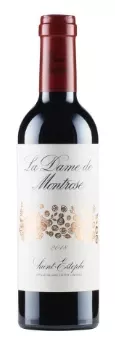
Very dense center palate to the La Dame this year with purity of fruit and round, velvety tannins. Juicy, too.
Reviews:
- Wine Advocate: Composed of 52% Merlot, 39% Cabernet Sauvignon, 5% Petit Verdot and 4% Cabernet Franc, harvested from September 17 to October 5, the deep garnet-purple colored 2018 La Dame de Montrose delivers a profound nose of baked plums, blackberry preserves and raisin cake with touches of dark chocolate, licorice, Chinese five spice and sandalwood. Full-bodied, rich and opulent in the mouth, it fills the palate with ripe, generous fruit, backed by firm, rounded tannins and seamless freshness, finishing long and spicy.
- Vinous: The 2018 La Dame de Montrose is a wine of pure and total sensuality. Deep, textured and beautifully perfumed, La Dame has so much to offer. Dark red fruit, wild flowers, cedar, sweet tobacco and anise give La Dame striking aromatic presence to play off its rich, layered fruit. Powerful and very Saint-Estèphe in bearing, La Dame is gorgeous in 2018. I won’t be surprised if the 2018 turns out even better than this note suggests.
Producer Information
Château Montrose is a well-regarded and critically much-lauded wine estate based in the Saint-Estèphe appellation of Bordeaux’s northern Médoc region. The estate was ranked as a second growth in the 1855 Bordeaux Classification, and is regarded as one of the very best properties at that level. The epitome of the Saint-Estèphe appellation, Montrose’s top wine is known for its structure (even austerity) in youth, but beguiling many as it ages. The grand vin, composed largely of Cabernet Sauvignon with some Merlot, is typically deeply colored, powerful and firm when young, but has superb aging potential. The second wine is La Dame de Montrose; the third is Saint-Estèphe de Château Montrose. The 95-hectare (235-acre) vineyard exists, unusually for modern Bordeaux, as one single entity. It is sited on an exposed site of deep, coarse gravels with sand and a little clay, overlooking the Gironde. The immediate proximity of the water has a moderating effect on both frost and summer heat, and the pebbles in the soil retain daytime warmth into the evening, aiding ripening. The château is situated around three kilometers (1.8 miles) northeast of Château Cos d’Estournel (another so-called “super-second” – i.e. a highly regarded second growth estate) on the border with the Pauillac appellation.