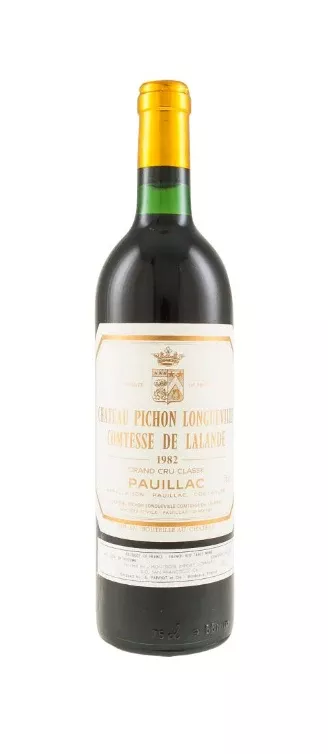
Another dazzling wine, the 1982 Pichon Lalande is utterly profound from the very first taste. In the glass, the 1982 is powerful and explosive, with seemingly endless layers of flavor that continue to unfurl over time. Vivid, intensely aromatic and seamless, the 1982 has enough pedigree and depth to drink well for at least several decades. What a wine!
Reviews:
- Wine Advocate: While bottles that have been traded or traveled extensively are beginning to tire, I was fortunate to buy a case of the 1982 Pichon Longueville Comtesse de Lalande from a cold cellar in Alsace where it had remained unmoved since release. Given impeccable storage such as this, the wine remains simply remarkable and numbers one of the vintage’s greatest achievements. Soaring from the glass with aromas of cassis and blackberries mingled with hints of cigar wrapper, dark chocolate, licorice and violets, it’s medium to full-bodied, broad and velvety, with a sensual and enveloping core of fruit, rich but melted tannins and a long, resonant finish. Seamless and complete, I’d choose a pristine bottle of the 1982 Pichon Lalande over any of the Pauillac first growths, and I’m trying to ration my remaining half-dozen bottles without much success.
- Wine Spectator: This unfurls with amazing grace, as refined tannins let the warmed cassis, macerated plum, pain d’épices, melted licorice, roasted alder and smoldering tobacco notes drape together and hang endlessly on the finish. A stunner that has been stuck at at this sublime point for a while, with no signs of moving any time soon. Thoroughly sublime and still the modern-era high-water mark for these wines.
Producer Information
Château Pichon Longueville Comtesse de Lalande is a highly regarded wine estate in the Pauillac appellation of the Haut-Médoc region of northern Bordeaux. of the most significant second growths in Pauillac, Bordeaux. Often shortened in common parlance to “Pichon-Lalande” or “Pichon Comtesse” (partly to differentiate it from neighbor, Château Pichon-Longueville Baron), the estate produces a regularly lauded, Cabernet Sauvignon-dominant grand vin.Pichon-Lalande also neighbors first-growth powerhouse, Château Latour at the southern end of the Pauillac appellation. All three estates share something of a similar terroir and climate, which partly helps to explain the quality of the wine at Comtesse de Lalande – is sometimes referred to as “nearly first growth”.The Pichon-Lalande estate covers 85 hectares (210 acres) in both Pauillac and Saint-Julien. The Saint-Julien holding covers twelve hectares (30 acres) and although the estate has produced a simpled labeled Saint-Julien, this wine is now rarely encountered.